Drywood termite localized infiltration focuses on precision gallery eradication inside framing timbers, eliminating active colonies without requiring structural tenting, bagging of food goods, or mandatory overnight…
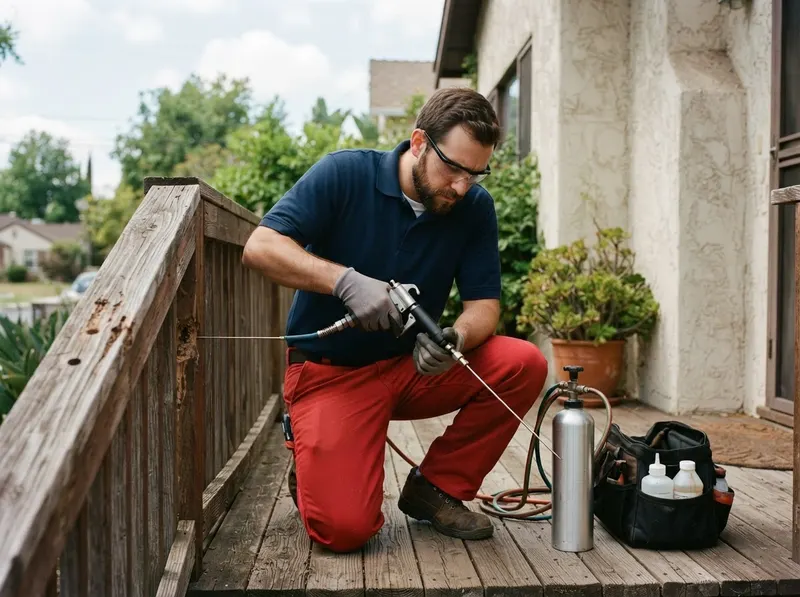
Drywood termite localized infiltration focuses on precision gallery eradication inside framing timbers, eliminating active colonies without requiring structural tenting, bagging of food goods, or mandatory overnight property evacuation. In Los Angeles County, drywood termites (Incisitermes minor) swarm during warm late-summer and autumn afternoons, entering attics, window casings, and exposed rafter tails. Properties in Woodland Hills experience accelerated swarm cycles due to sustained valley heat exceeding 95 degrees Fahrenheit, while coastal structures in Venice and Brentwood endure persistent marine humidity that softens exterior fascia boards. Technicians identify specific gallery networks by locating hexagonal fecal frass accumulations beneath exit kick-holes, tapping wood members to locate hollow cavities, and mapping internal chamber architecture.
Local spot treatments fit properties where drywood termite activity remains confined to accessible, identified structural elements such as an exposed rafter, a single doorway header, or decorative corbels in historic Los Feliz or Silver Lake bungalows. The engineering trade-off is accessibility versus coverage: direct chemical injection delivers immediate perimeter-locked mortality within targeted lumber members, but it does not protect concealed wall studs situated behind structural lath, plaster, or drywall without drilling access. Whole-structure fumigation treats inaccessible wall voids simultaneously, yet requires residents to vacate for three consecutive days and provides zero residual chemical protection against future post-treatment swarmers.
1. Structural technicians inspect roof perimeters, subfloors, and interior joinery using acoustic testing to identify kick-out holes and measure structural density.
2. Small 1/8-inch access injection ports are drilled directly into the verified drywood termite galleries at 6- to 10-inch intervals.
3. Technicians inject a slow-acting, transfer-effect non-repellent liquid or expanding termiticide foam under steady mechanical pressure throughout the internal gallery network.
4. Technicians seal all access holes with structural wood dowels or acrylic patch materials, followed by a targeted borate surface barrier applied to surrounding exterior wood to stop secondary swarmer re-entry.
Field protocols utilize localized injection compounds that bind tightly inside the core wood fibers, eliminating airborne chemical drift and ensuring indoor domestic pets encounter zero surface exposure during or after the procedure. Single-site structural interventions avoid indefinite recurring chemical spray subscriptions, resolving the immediate infestation at the source through systematic mechanical sealing. From older post-and-beam properties in Highland Park and Echo Park to multi-family residences in Mid-City and hillside dwellings in Sherman Oaks, treating localized infiltration seals structural vulnerabilities before colony growth undermines load-bearing timber integrity.
Every job gets a firm, written price after a free on-site visit.
Tell us about your drywood termite localized infiltration job in Los Angeles and we'll send a clear, written quote, usually the same day.
 PestLock Pest Control